

Executive Summary: Homeowners rarely judge your craftsmanship by reading paragraphs of generic company history—they judge your reliability within seconds based on how your business looks on a smartphone. Effective contractor web design eliminates slow page loads, swaps stock photos for real crew work, surfaces trust proof immediately, and guides homeowners straight into a clear Tap-to-Call or estimate form.
If you run a skilled contracting business, few things are more frustrating than watching a less experienced competitor win higher-paying jobs simply because their website looks cleaner than yours.
Most contractor websites fall into one of two traps: either they were thrown together using a clunky DIY template filled with fake stock smiles, or an overpriced generalist agency loaded them with heavy animations that crawl on a homeowner’s phone. Either way, the homeowner hits the back button—and calls the next contractor on Google.
Here is what actually separates contractor web design that earns respectful homeowner calls from an online brochure that invites price haggling.
1. The Five-Second Mobile Test Every Homeowner Runs
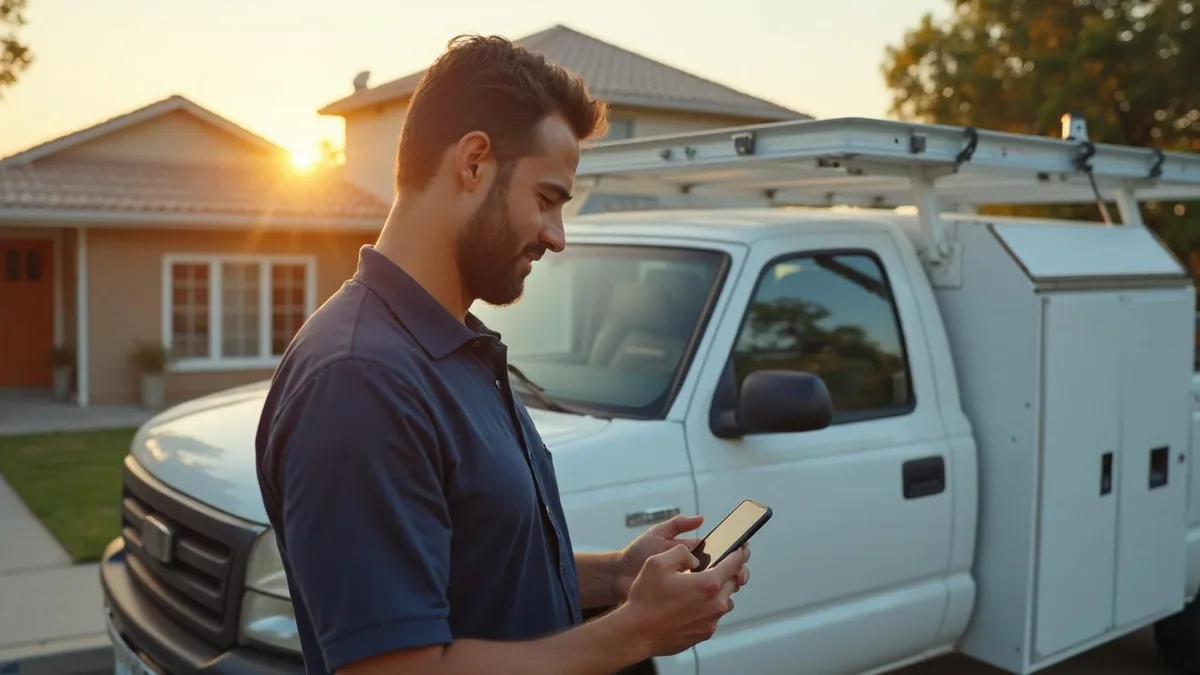
Think about where a homeowner is standing when they search for help: looking at a stained drywall ceiling, standing in a dated kitchen, or walking around cracked exterior trim while holding their phone.
Within seconds of tapping your website link, their brain checks three things:
- Do you clearly cover my area and trade? If your headline only says “Welcome to Quality Construction Solutions”, they do not immediately know whether you paint houses in Naperville or pour commercial slabs downtown.
- Do you look licensed, insured, and established? If the layout looks neglected, blurry, or outdated, homeowners subconsciously worry your estimates, paperwork, and warranty follow-through might feel just as sloppy.
- Can I call or request a quote with one thumb? If they have to pinch-zoom a menu or dig for your phone number at the bottom of the page, they leave.
2. Five Elements That Turn Visitors Into High-Trust Estimates
You do not need flashy gimmicks. High-converting web design for contractors relies on visual order and homeowner psychology:
Real Before-and-After Project Galleries
Nothing sells craftsmanship like proof from local homes. Clear, sharp photos of finished kitchens, exterior repaints, roofs, or patios build instant confidence—especially when paired with plain captions explaining the scope and neighborhood.
Immediate Licensing, Insurance, and Warranty Visibility
Homeowners fear getting burned by an uninsured crew. Putting plain, verifiable trust signals—state/local licensing clarity, General Liability coverage, workmanship warranty terms, and real 5-star customer feedback—right near the top removes hesitation before pricing ever comes up.
Lightning-Fast Mobile Speed
Heavy page builders drag down cellular loading speeds. A streamlined static build opens nearly instantaneously on iPhone and Android devices, which keeps impatient prospects on your page long enough to read your offer and call. See how we structure this speed-first approach across our Chicago contractor website system and Houston contractor website system.
Simple, Multi-Channel Contact Paths
Different homeowners prefer different ways to reach out:
- Tap-to-Call button: Ready for urgent repairs or homeowners who want to talk straight to the owner.
- WhatsApp / SMS photo quote path: Easy for busy homeowners to snap two photos of a repair and send them over quickly.
- Short 3-field estimate form: Name, phone/email, and brief project description—no 20-question interrogation that kills completion rates.
Pain-First, Clear Service Copy
Homeowners do not care about technical trade jargon when requesting a bid—they want clean floors protected, transparent daily communication, written quotes with zero surprise add-ons, and crews who finish on schedule. Speak directly to those homeowner concerns.
3. Website Comparison: DIY Builders vs. Generalist Agencies vs. Conversion-Built Contractor Sites
| Feature / Outcome | DIY Template Builder (Wix / GoDaddy) | Generalist Local Agency | Purpose-Built Contractor Website |
|---|---|---|---|
| Mobile Load Performance | Often sluggish with heavy scripts | Frequently built on bloated themes | Near-instant mobile load speed |
| Industry Copywriting | Owner has to write everything alone | Generic filler text | Focused homeowner trust & trade copy |
| Local SEO Structure | Basic single homepage setup | Sold as an expensive add-on | Structured around local services & cities |
| Ongoing Headaches | Constant layout tweaking by owner | Slow ticket wait times for small edits | Zero-friction setup & reliable updates |
| Estimate Conversion Flow | Buried contact form | Pretty portfolio with weak CTAs | Visible Tap-to-Call, WhatsApp & mobile CRM |
4. What to Prepare Before Building or Upgrading Your Website
If you want a website upgrade done fast without losing work hours to endless meetings, gather these four simple assets:
- 8 to 15 honest photos of recent completed work (clean framing, good lighting, before-and-after pairs where possible).
- Your top 3 to 5 profitable services so your best-margin work takes center stage rather than tiny odd jobs.
- The specific cities and suburbs where you actually want crews driving.
- Your license/insurance details and estimate phone line connected to an active phone or mobile lead tracker.
Once you have those basics ready, pair a sharp website with a clean local SEO strategy for contractors or explore our full branding and contractor web systems overview to see how identity, speed, and search visibility work together.
Frequently Asked Questions
How does a better website stop homeowners from haggling on price?
When a contractor shows up in an unmarked truck with a broken website, homeowners assume they are hiring a budget side-hustle and immediately negotiate the bid down. When your brand identity, real project photos, insurance clarity, and website professionalism match top-tier companies in your metro area, homeowners treat your quote with serious respect.
Can I keep using my existing business phone number and domain?
Yes. Your website should strengthen the domain and phone line you already print on trucks, yard signs, and shirts—routing calls and form requests directly to you without locking your business inside a third-party app.
Do I need to write my own website text?
No. As a contractor, your highest value is running jobs and closing walkthroughs. A dedicated contractor web partner turns brief voice notes and real job photos into clear, persuasive US homeowner copy so you never stare at a blank screen.